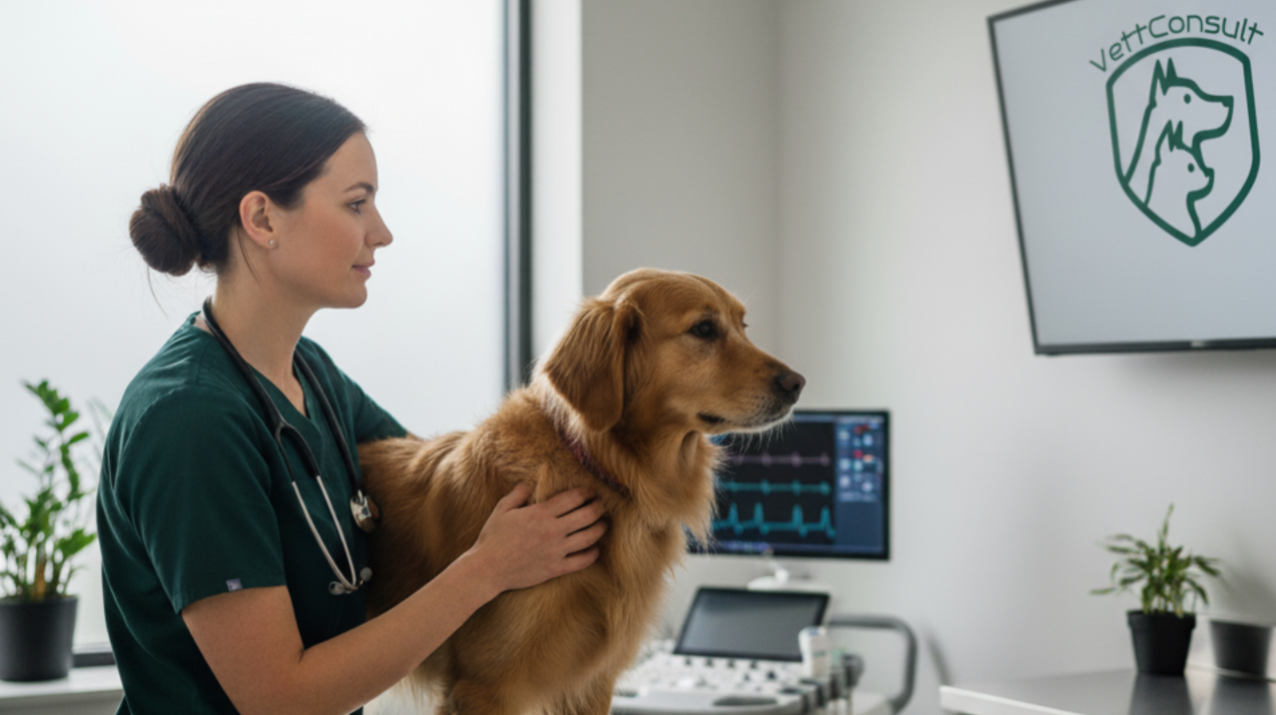
How AI is transforming veterinary medicine enhancing accuracy, efficiency and empathy—without replacing vets. Evidence, case data, and next steps.
The veterinary profession stands at a transformative crossroads.
As artificial intelligence and emerging technologies reshape medical landscapes worldwide, veterinary medicine is experiencing its own technological renaissance.
Yet, contrary to common fears, the evidence now shows that technology is not replacing veterinarians it is amplifying their reach, precision, and compassion. This month, VettInsider explores the research behind this shift and the real-world data proving that innovation, when done right, strengthens rather than weakens the human touch.
The Undeniable Truth: Veterinarians Remain Irreplaceable
A comprehensive systematic review published in Frontiers in Veterinary Science (2025) analyzed 39 primary studies spanning 2013–2024. The conclusion is clear: AI serves as a diagnostic ally, not a replacement.
Following PRISMA standards, researchers found that while deep learning models reach over 90% accuracy in specific diagnostic tasks, their success depends entirely on veterinary oversight for interpretation and clinical decision-making.
“Deep learning models are most effective as decision-support tools rather than standalone diagnostic systems,” Dr. Mehar Khatkar, University of Sydney, lead author of the review.
This insight echoes across multiple studies: when AI and veterinarians collaborate, clinical capabilities expand without diminishing professional expertise.
Diagnostic Revolution: AI Achieving Human-Level Performance
Radiographic Excellence
A landmark study analyzing 22,000 veterinary radiographs of cats and dogs demonstrated that AI mA landmark study analyzing 22,000 veterinary radiographs of cats and dogs demonstrated that AI models produced significantly lower error rates than veterinarians in identifying 15 types of thoracic lesions.
In feline cardiology, convolutional neural networks (CNNs) have achieved over 90% diagnostic accuracy in identifying hypertrophic cardiomyopathy, matching the precision of expert radiologists.
Another study comparing AI-derived cardiac indices versus human-calculated standards found AI measurements more consistent, particularly in complex imaging cases.odels produced significantly lower error rates than veterinarians in identifying 15 types of thoracic lesions.
In feline cardiology, convolutional neural networks (CNNs) have achieved over 90% diagnostic accuracy in identifying hypertrophic cardiomyopathy, matching the precision of expert radiologists.
Another study comparing AI-derived cardiac indices versus human-calculated standards found AI measurements more consistent, particularly in complex imaging cases.
Cytological and Histopathological Breakthroughs
Microscopic analysis has seen even more dramatic progress. AI models now reach 98.7% accuracy in recognizing reticulocytes in feline blood smears. Even more strikingly, deep learning systems have begun to outperform pathologists in grading prognostic elements of canine mast cell tumors.
In equine medicine, CNNs diagnosing exercise-induced pulmonary hemorrhage reached 92% accuracy, compared to 76% among specialists a reminder that technology can excel when pattern recognition, not empathy, is the primary need.
Workflow Efficiency: Returning Time to Patient Care
Documentation Revolution
Administrative overload remains one of the greatest drains on clinical focus. At the AVMA AI Symposium, researchers presented data showing that AI transcription reduces documentation time by approximately 90 minutes per day freeing clinicians to see more patients or simply finish on time.
A real-world pilot at Texas A&M Veterinary Medical Teaching Hospital (in collaboration with AI platform VetRec) found that automation of patient histories, discharge letters, and record organization improved both efficiency and quality of client communication.
“It allows veterinarians to do what they were trained to do focus on the patient, not the paperwork” said Dr. Magdoline Awad, Chief Veterinary Officer, Greencross.
Precision and Consistency
Meanwhile, tools like IDEXX’s SediVue Dx use AI-powered urine sediment analysis to deliver accurate results within minutes identifying bacterial presence, cell types, crystals, and casts with consistent reliability regardless of workload or fatigue.
Global Impact: Addressing Workforce Challenges
The Australian Model
Australia offers a compelling case study. With 15,000 registered veterinarians serving 28.7 million pets — roughly one vet per 2,000 animals AI has shifted from luxury to necessity.
Heidi Health’s AI Scribe, launched with major veterinary networks, now processes more than 5,000 consultations weekly. Clinics report transformative gains as automation handles repetitive tasks, restoring the human connection between vets, clients, and patients.
Productivity Imperatives
Research by IDEXX forecasts that veterinary practices must boost productivity by approximately 40% by 2030 to meet global demand. Automation of scheduling, data management, and documentation offers the clearest path forward allowing growth without compromising care quality.
Evidence-Based Clinical Integration
Validation and Reliability
Transfer learning techniques such as GoogLeNet have achieved 91–94% accuracy in classifying canine meningioma vs. glioma from MRI images. Similarly, VGG networks applied to canine lumbar disc MRIs exceed 90% accuracy across five degeneration grades These findings highlight how AI can master narrow, data-rich tasks, while clinical judgment remains the anchor for broader interpretation.
Species-Specific Applications
Currently, 64% of AI studies focus on dogs and 20% on cats, leaving clear opportunities for expansion into livestock and exotic species. Models have shown consistent performance across species for cardiac disease detection a strong foundation for future multi-species development.
Addressing Skepticism: Safety and Validation
Regulation in Progress
While human medical AI already counts 882 FDA-approved AI/ML devices, veterinary AI remains largely self-regulated. This presents both a risk and an opportunity: veterinarians have a unique chance to shape ethical and practical standards before they are imposed externally.
Quality Assurance
Multiple studies affirm that AI accuracy relies on high-quality, diverse datasets and expert supervision. Veterinary participation in dataset curation, validation, and feedback loops ensures clinical relevance and safety keeping the technology aligned with patient welfare.
The Path Forward: Collaboration, Not Replacement
Economic Reality
Practice management analyses show clinics adopting comprehensive AI tools experience 25–40% efficiency gains and reduced operational costs. The result: better patient throughput, lower burnout, and improved work-life balance.
Professional Empowerment
Rather than diluting expertise, AI amplifies it. As one clinician put it: “My anxiety about incoming cases turned into enthusiasm I can finally focus on helping more clients and their pets.”
Another, a hearing-impaired veterinarian, shared: “With AI handling documentation, I could connect through expressions and body language without worrying about the notes.”
The Message Is Clear
Technology is not replacing veterinarians. It is empowering them to be the best versions of themselves more focused, empathetic, and effective than ever before.
Veterinary medicine is evolving toward a new equilibrium: AI for efficiency, humans for empathy. The future of animal care lies not in competition between man and machine, but in partnership.
Sources
About VettInsider
VettInsider is the weekly newsletter from VettConsult, bringing evidence-based insights on technology, innovation, and the evolving landscape of veterinary medicine.